Is the pope Catholic? Does the sun fuse hydrogen? Did Toyota sell the most cars last year? The answer to those three questions is: yes, for a little while longer, and most definitely.
For the sixth year running, Toyota is the world’s number one automaker, and the Toyota brand continues to be the most popular new car brand by several parsecs.
Across its three car brands (Toyota, Lexus and Daihatsu) the Nagoya-based automaker sold 11,212,092 across the world last year. That’s an increase of 4.8 per cent over 2024, or an extra 516,168 vehicles.
Factor in volume from the truck-only Hino brand (110,483), and the total rises to 11,322,575.
CarExpert can save you thousands on a new car. Click here to get a great deal.
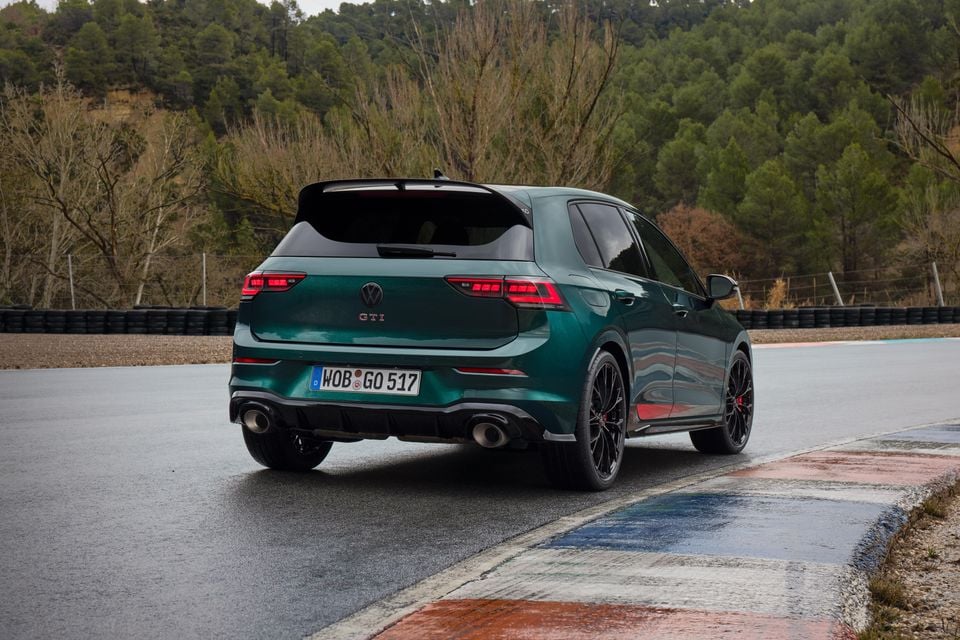
By contrast, the second place Volkswagen Group saw sales drop 0.5 per cent to 8,983,900. This figure includes 305,600 semi trucks from the company’s Traton division, which includes MAN, Scania, and International.
Brands
All of Toyota’s car brands recorded a jump in sales volume, although Hino was down 12.0 per cent. In January 2025, the truck brand settled a case brought the US and Californian governments for US$1.6 billion (A$2.3 billion) after admitting it had faked emissions test results for around 100,000 diesel trucks.
Daihatsu recorded the biggest improvement, all of which driven by a 46.1 per cent increase in its home market to 536,566. This more than cancelled out an 18.0 per cent drop in Indonesia and other much smaller markets.
| Brand | 2025 sales | Change |
|---|---|---|
| Toyota | 9,654,576 | +3.7% |
| Lexus | 882,231 | +3.6% |
| Daihatsu | 675,285 | +25.8% |
For the Volkswagen Group, the most significant gains were for its value-oriented brands: Skoda, and Seat/Cupra. Audi and Porsche, which typically have been the automaker’s profit centres, saw their sales go backwards.
| Brand | 2025 sales | Change |
|---|---|---|
| Volkswagen | 4,730,600 | -1.4% |
| Audi | 1,623,600 | -2.9% |
| Skoda | 1,043,900 | +12.7% |
| Seat/Cupra | 586,300 | +5.0% |
| Volkswagen Commercial | 393,700 | -3.6% |
| Porsche | 279,400 | -10.1% |
| Lamborghini | 10,700 | +0.6% |
| Bentley | 10,100 | -4.8% |
Markets
Both Volkswagen and Toyota break down their regional performance in different ways, with Volkswagen providing more detail about sales in Europe, and Toyota showcasing more data from Asia.
In the table below we’ve tried to bring together the two data sets as best as possible, but some countries may live in different buckets depending on the firm.
Please note there’s also a slight discrepancy as Volkswagen’s figures include the Traton truck division, while Toyota’s excludes Hino’s numbers.
| Region | Toyota Motor Corp | TMC change | Volkswagen AG | VAG change |
|---|---|---|---|---|
| Europe | 1,182,551 | +1.4% | 3,939,000 | +4.5% |
| North America | 2,929,660 | +7.3% | 946,800 | -10.4% |
| Latin America | 472,049 | -3.2% | 663,000 | +11.6% |
| China | 1,780,396 | +0.3% | 2,693,800 | -8.0% |
| Rest of Asia/Pacific | 3,982,317 | +7.2% | 320,400 | +8.5% |
| Middle East/Africa | 865,119 | +5.5% | 420,800 | +10.0% |
Toyota credited strong growth in the USA (up 8.0 per cent to 2,518,071) and Japan (up 4.1 per cent to 1,501,263) for much of its improved performance.
Volkswagen lost ground in the US (down 13.6 per cent) thanks to the “challenging environment characterised by the tariff situation”, but most critically numbers in China continued to fall due to the “continuing intense competitive situation”.
There, Volkswagen lost its sales crown to BYD in 2023, a honour it had held since 1986. The brand is still clinging on to the fact that it remains the leader in the combustion engine market in China.
Drivetrains
Toyota is unquestionably king of hybrids, and full hybrid vehicles accounted for 42.1 per cent of Toyota and Lexus sales in 2025.
The jump in mild hybrid volume can largely be attributed to V-Active system available in HiLux ute.
| Drivetrain type | Toyota/Lexus sales | Change |
|---|---|---|
| Hybrid | 4,433,503 | +7.0% |
| Electric | 199,137 | +42.4% |
| Plug-in hybrid | 183,845 | +19.5% |
| Mild hybrid | 177,152 | +86.8% |
| Fuel cell | 1,257 | -29.3% |
Unfortunately Volkswagen didn’t break down its electrified drivetrain sales mix, but it did provide details about its global EV sales.
Across all of its brands, EV sales grew by 32.0 per cent to 983,100 to account for 10.9 per cent of all sales. The majority of EV volume took place in Europe, although there was a significant jump in US figures, likely driven by the end of the US$7500 (A$10,700) federal tax credit in September 2025.
Alarmingly, EV numbers in China collapsed, likely due to on-going strength of domestic automakers in the pure electric and range extender EV segments.
| Region | 2025 EV sales | Change |
|---|---|---|
| Europe | 742,800 | +65.9% |
| USA | 72,000 | +45.7% |
| China | 115,500 | -44.3% |
| Rest of the world | 52,900 | +31.7% |
| World | 983,100 | +32.0% |
As we reported in January, Volkswagen is now the number one EV brand in Europe, overtaking Tesla. Global EV sales for the main Volkswagen passenger car brand held steady, largely due to poor numbers from China.
| Brand | 2025 EV sales | Change |
|---|---|---|
| Volkswagen Passenger Cars | 382,000 | -0.2% |
| Audi | 223,000 | +35.6% |
| Skoda | 174,900 | +119.8% |
| Seat/Cupra | 79,700 | +65.9% |
| Porsche | 61,700 | +57.8 |
| Volkswagen Commercial | 58,600 | +103.4% |
The automaker also broke down sales of its 10 most popular models: Volkswagen ID.4/ID.5 (163,400), Volkswagen ID.3 (117,700), Skoda Elroq (95,300), Audi Q4 e-tron (84,900), Audi Q6 e-tron (84,400), Skoda Enyaq (79,600), Volkswagen ID.7 (79,500), Volkswagen ID.Buzz (60,700), Porsche Macan (45,400), and Cupra Born (43,700).