
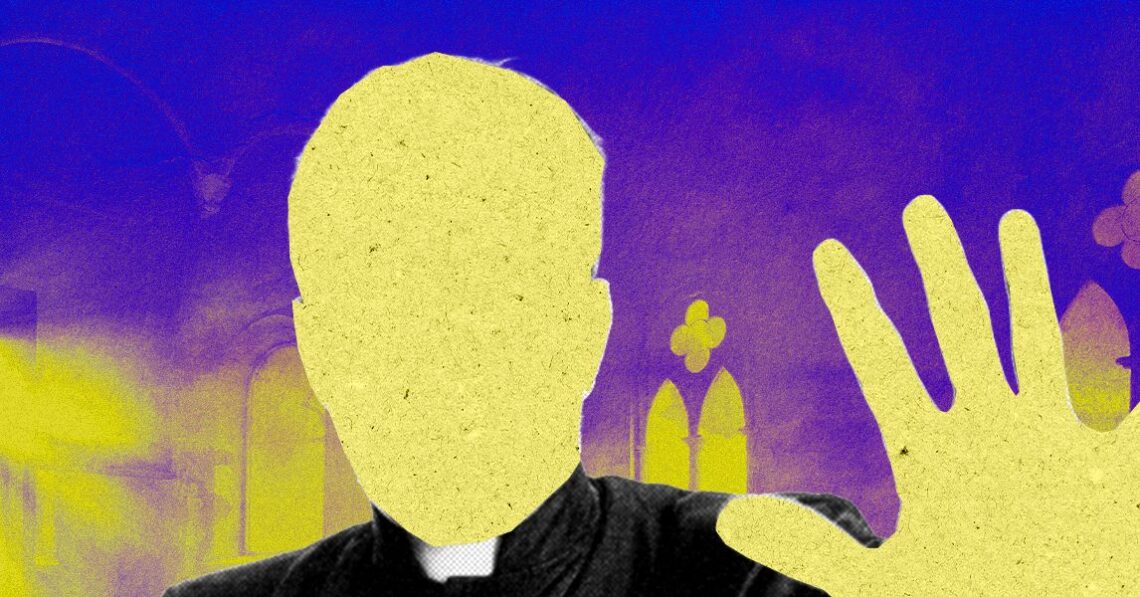
Father Mike Schmitz, a Catholic priest and podcaster, addressed his congregation of more than 1.2 million YouTube subscribers in November with an unusual kind of homily. You couldn’t always trust the words coming out of his mouth, Schmitz said, because sometimes they weren’t really his words—or his mouth. Schmitz had become the target of AI-generated impersonation scams.
“You’re being watched by a demonic human,” said the fake Schmitz in one video that the real Schmitz, wearing an L.L. Bean jacket over his clerical suit, included in his public service announcement as an example. “You must act quickly, because the spots for sending prayers are already running out,” said another fake Schmitz with a looming hourglass behind him. “And the next trip will only take place in four months.” The fake Schmitz sounded ever-so-slightly robotic as he urged viewers to click a link and secure their blessing before it was too late.
“I can look at them and say ‘That’s ridiculous, I would never say that,’” the real Schmitz, who is based in Duluth, Minnesota, said in his callout video. “But people can’t necessarily tell. That’s a problem. That’s, like, a really big problem.”
On the real video of Schmitz, some of the top comments from his followers said they had seen other prominent Catholic figures impersonated through AI videos, including the pope. According to cybersecurity expert Rachel Tobac, who is the CEO of SocialProof Security, that’s because pastors have become extremely popular subjects of AI scams and other deceptive media.
“If you’re on TikTok or Reels, they’ve probably come across your For You page,” Tobac says. “This is somebody who looks to be a priest, who’s wearing all of the garments, who’s standing up on a pulpit or a stage or whatever you’d call it, and they seem to be speaking to their congregation in a very enthusiastic way.”
Pastors and ministers in Birmingham, Alabama, Freeport, New York, and Fort Lauderdale, Florida, have warned their followers about AI scams impersonating them in the form of DMs, calls, and deepfakes. Alan Beauchamp, a pastor in the Ozarks, said his Facebook account was hacked, with the hacker posting a fake, possibly AI-generated certificate for cryptocurrency trading with Beauchamp’s name on it and a caption urging his congregants to join him. A megachurch in the Philippines received reports of deepfakes featuring its pastors. An evangelical church in Nebraska issued an AI “scammer alert” on Facebook, and one churchgoer in the comments posted a screenshot of texts purported to be from one of their pastors.
It doesn’t help that a lot of the pastors and ministers who have grown large online followings often actually are soliciting donations and selling things, just not the same things that their AI impersonators are. With the help of social media, religious authority figures have been able to reach believers far beyond their neighborhoods, but the proliferation of content featuring their likenesses and voices has also provided the perfect opportunity for scammers wielding generative AI tools.
“You get a phone call that sounds like the pastor or a board member, someone who has been on livestreams every week, and their voices can be sampled and put into AI,” said a member of ChurchTrac, a church management software company based in Florida, in a YouTube video warning about the rise of AI scams targeting churches. “The scammer can use that voice and call into a church and say ‘Hey, would you transfer this fund to this account?’”